

Greener Tennis
We are acting to improve the club’s performance on energy, water, waste and other environmental issues. Members are used to recycling at home, trying to use less water, saving energy and maybe switching to lower carbon suppliers. Now we’re doing that as a club. An Environment Group has been at work since November 2023 figuring out how we can up our game. The first step was to understand how much energy and water we use, the carbon dioxide emissions we’re responsible for, the waste we create and what happens to it. We are also thinking about our direct impact on the Shepherd’s Cot environment and the wildlife around the club. These are the main environmental issues we need to act on.
Action so far:
– Thermostats installed in the clubhouse so we can cut energy waste
– Investigate the installation of sub-meters for electricity and water, so that we can measure the use of both in more detail than was previously possible;
– Provide members with information on the best ways of using fewer balls and thereby reducing our environmental impact.
– Video produced on recycling at the club – watch here
Energy and Carbon
The club used electricity and gas in 2025 that was responsible for the release of almost 18 tonnes of carbon dioxide emissions. This is a similar amount of CO2 emissions as two typical UK households of 2-3 people produce. Reducing these emissions is the most significant thing we can do to improve our environmental performance – but also the most challenging. Installing solar panels on the clubhouse roof could halve our CO2 emissions from electricity use. It will be expensive, so this is a medium term action.
In the meantime, we will aim to reduce the gas we use to heat the clubhouse by using gas more efficiently. At present, however, we are failing to do this; our consumption year on year is rising and he same is true for electricity. On a positive note, the club has switched to LED lights on the main courts and this has been a major step in the right direction. We are investigating other electricity use to pinpoint ways of reducing our electricity consumption.

Water
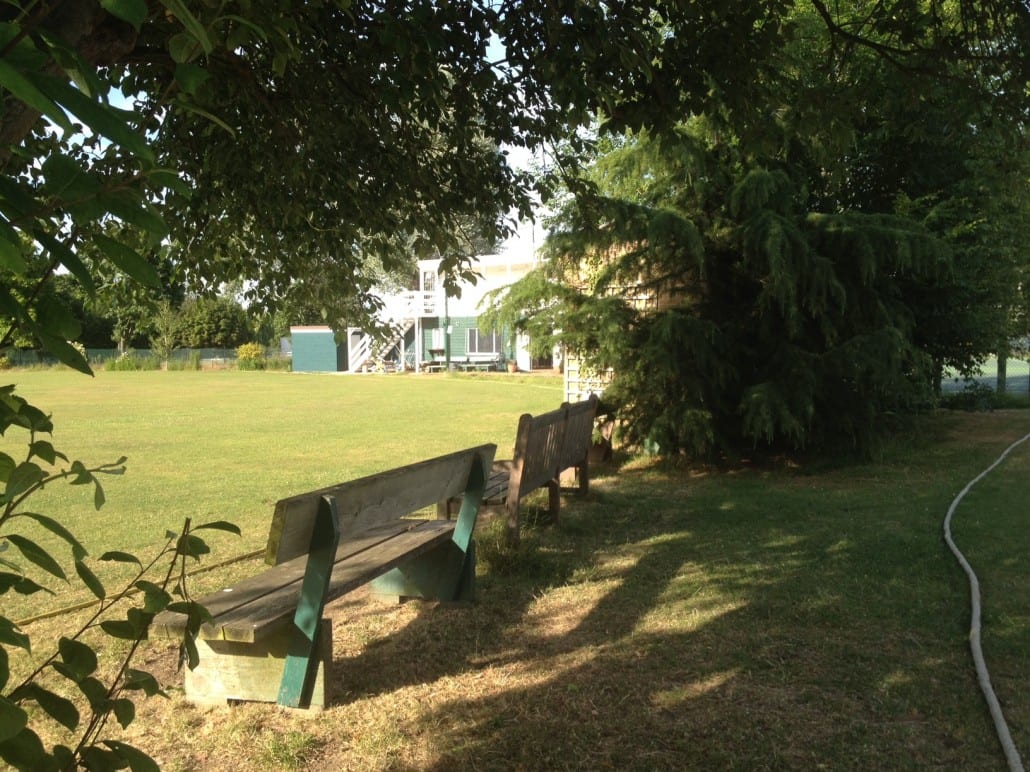
Watering the cricket field is the biggest use of water. Ideally, we would store rainwater but there isn’t space for storage and a pumping system. Our groundsman, Tom Palmer, takes water conservation very seriously and irrigates the cricket pitches strictly according to need and at times that will maximise the take up of irrigation water.
The new surface on Brookside substantially reduced how much water we need for these courts.
Waste
The waste we generate is pretty similar to what we have at home – glass and plastic bottles, tins, crisp and other packets, paper and food waste from the kitchen. The club doesn’t have the council recycling service that we get at home, so we pay for the waste service. Surprisingly, our current contractor doesn’t include glass in its mixed recycling collection and food waste is not collected separately.
The first step, of course, is for us to put the right items in the right bins in and around the clubhouse and we have produced a short video to explain what goes where. Sometimes members are confused as to what items should go in which bin. The guidance on this is straightforward; our recycling bins are for dry plastic bottles, paper, cardboard, and metals, eg tennis ball can ring tops and aluminium cans. Anything else goes in the residual waste bin. If in doubt, keep it out! Contamination of the recycling bin could result in the whole lot being rejected and rendering our efforts void. Incidentally, our coffee cups are 100% paper.
Grass cuttings from the cricket field are a different type of waste. They are currently kept on the site and used as compost material on the margins of the cricket field.

Tennis balls can they be sustainable?
The short answer to this question is, unfortunately, no.
There are two main reasons for this, which relate to:
- materials; and
- useful lifetime.
Tennis balls are composed of a largely natural rubber core and covered with a felt that is a mixture of wool and nylon.

The higher the quality of the ball, the higher the content of natural rubber and wool. The composition of tennis balls is governed by the International Tennis Federation.
Nylon in the felt is obviously an undesirable material from a sustainability perspective, derived as it is from petroleum, but latex rubber and wool are not without downsides too. Rubber production is associated with destruction of habitats in tropical regions and wool comes from sheep, a significant source of methane (a potent greenhouse gas).
Finally, conventional tennis balls are pressurised and this requires packaging that preserves this pressurisation up to the point of use; typically, this packaging is made of plastic and metal.
A tennis ball takes a very long time to decompose naturally; estimated at 400 years. Any discarded balls in the wider environment are therefore a problem and cause long term contamination.
The typical lifetime for a tennis ball on the court is very short, especially at the elite level. The Wimbledon tournament uses 55,000 balls annually, as balls are replaced after the first seven games and every nine games thereafter. Worldwide, about a billion balls are manufactured, used and discarded each year.
Estimating how many balls are used annually at Highgate is difficult, but is likely to be more than 3000, based on the club’s purchasing history and allowing for the balls bought by individuals. That’s a big number and one that is hard to reduce in a substantial way.
Options for Recycling and Reuse
Tennis balls are very hard to recycle, in the sense that they are ‘deconstructed’ after use and the separate materials used again, as with glass, metals and some plastics.
Some facilities in the USA can grind down used balls to create a material that can be used for floor surfaces – including tennis courts! A similar programme in France takes balls from the French Open to create floor coverings for sports halls. It takes 10,000 balls to cover 100 square meters.
In the UK, some new services have emerged that use proprietary technology to take apart used balls and recover the constituent materials, ie the felt and the rubber. An example of this kind of company is Circularball (https://hubbauk.com/initiatives/circularball/). Until recently, another company (Dyuce) operated a similar service, but appears to have swiftly gone out of business, demonstrating how hard it is to persuade clubs to pay for the most sustainable route for taking away and genuinely recycling used tennis balls.
The balls in our club that are collected by Recycaball are used again for tennis, or redistributed to industries that have other applications for them, if sufficiently clean. (https://recycaball.com/) Balls that are dirty and/or worn are sent to animal shelters or kennels for dogs to chase. This collection facility has the benefit of postponing the end of life for some tennis balls, but should not be confused with recycling it. Incidentally, used balls in Haringey that are disposed of in the residual waste stream will be incinerated at the Edmonton facility and not sent to landfill. In this way, they are at least generating some electricity.
A simple DIY method of extending the life of tennis balls is to buy a ball pressuriser, costing approximately £30. This allows the re-pressurisation of 3 or 4 balls and which will restore the ball’s bounce to nearly its original state.
So, what can we do to reduce this problem our sport is responsible for?
Realistically, the only option is to extend the useful life of the balls we use. The sport requires that the tennis ball is manufactured in a particular way and so there is no prospect of a manufacturer using alternative materials that can be easily recycled. The re-use of balls via Recycaball is a worthwhile option, but is unlikely to result in an individual ball being used again more than once. This process will not extend the ball’s life indefinitely.
Balls are typically discarded when their bounce fades and become unsuitable for a satisfactory game of tennis. Deciding when this point has been reached is subjective and opinions will vary. The bounce of a conventional ball begins to diminish immediately it is taken out of the pressurised can and by the end of a match is almost certainly measurably inferior to its initial state. Even when taken out of a can and unused, a ball’s internal pressure will decline. This is where a ball pressuriser can be helpful in restoring, at least partially, a ball’s pressure and keeping three or four balls in a better state for social play and training.
An alternative approach is to use balls that have been designed as unpressurised, so their bounce remains the same over their usable lifetime. This is achieved by making them with a ‘stiffer’ shell, which can make striking such balls feel a little ‘heavier’ and some players report a detrimental effect on their arm muscles and joints.
Of those balls on the market of this type, club users have found that Tretorn ‘X’ balls perform the best. The Thursday afternoon social doubles session used some of these balls over a six month period before they became too worn for further use. That is quite an impressive lifetime as compared with a conventional ball and more than compensates for their higher cost. Although we have no hard data for a strict comparison, it is highly likely that the useful lifetime of an ‘’X’ ball is substantially more than that of a conventional ball that is re-used through a re-pressurisation process, as with Recycaball.
There is likely be a reluctance to use ‘X’ balls in matches and for people playing at a higher level, but there seems no reason why they cannot be used for social tennis, ladder matches and practice, where players are comfortable with them. At their end of useful life, they should not be placed in the Recycaball bin, however. These balls are unpressurised and therefore it makes no sense to re-pressurise them.
In summary, for those club members wishing to buy and use tennis balls in the least unsustainable way, they should:
- extend the life of balls as long as possible by using a ball pressuriser and using the Recycaball collection service; and/or
- consider playing with balls of the Tretorn ‘X’ type as an alternative to conventional balls.
If enough people were to follow these principles, we might begin to reduce the total amount of balls used and discarded each year by players at our club. As observed at the beginning of this note, tennis balls come with an environmental impact that is unavoidable and one we can only reduce slightly, not eliminate.

The Team
The club’s Environment and Sustainability Group consists of these volunteers:
- Roger Barrowcliffe (lead)
- Roger Cowe
- Julia Lampard
- Steve Scott-Robson
- Tom Palmer (connecting with cricket)
- Richard Tusting (connecting with Shepherd’s Cot)